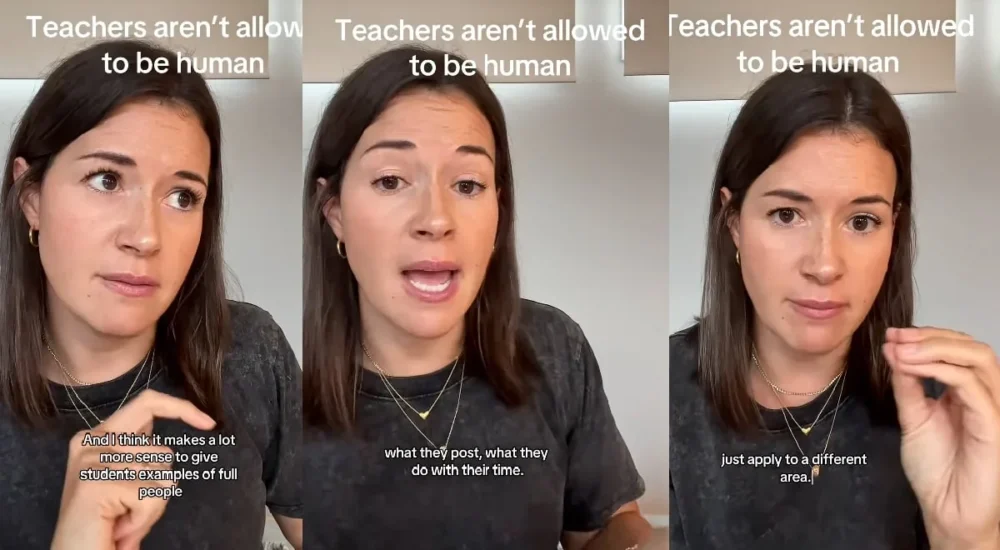
FLORIDA, FL — A Florida fifth-grade teacher known as Ms. Y is drawing a wave of attention after describing what she sees as a simple truth about classroom learning: teachers can only do so much if students do not listen. In a TikTok video that has picked up more than 594,000 views, she argued that the problem is not that educators are failing to teach, but that some students are not “studenting,” as she put it.
Ms. Y said she made the video after hearing the familiar complaint that teachers are not doing their jobs. She said her own experience has shown the opposite. To make her point, she described a classroom test where she placed the answers on the screen and still found that most of the class missed them.
A classroom experiment meant to prove a point
Ms. Y said the test happened well into the school year, when her students already knew her routine. Before the assessment, she says she reviewed the slide that explained what test they were taking and what students should do when they finished. Then, according to her, she added the answers to the test in the corner of the screen.
That decision was meant as a kind of informal classroom experiment. The teacher said she wanted to see whether her students would actually look up and use the information she had already displayed. Instead of finding a class carefully checking the board, she said only a small number of students noticed anything useful.
Her point was not that the test was unusually hard. It was that the directions and answers were already visible, yet many students still did not catch them. For Ms. Y, that became evidence that attention, not instruction, was the bigger obstacle in the room.
Only four students noticed the answers
Ms. Y said the result was strikingly lopsided. Out of 72 students, she claimed that just four looked up at the board long enough to figure out the answers. The rest, she said, did not catch on and ended up failing the test.
In her telling, that outcome underscored the frustration many teachers feel when their effort goes unseen. She said the class had already been shown the process and the slide had already been explained. Even so, the information on the screen did not translate into success for most of the students.
That was the heart of her message: teachers can provide the material, repeat the directions, and even make the answers visible, but students still have to engage with what is in front of them. Ms. Y said the problem is not that educators are refusing to teach. It is that students are not always paying attention.
Other educators say they know the feeling
The video quickly struck a nerve with other educators who said they have had similar experiences. In the comments, one teacher described handing out study guides that included the answers and going over every single problem the day before the test, only to say that 75% of students still failed.
Another commenter blamed the constant work of managing behavior during the day. That theme came up again and again, with teachers saying that behavior problems can consume time that would otherwise go to instruction. One educator summed it up by saying the issue is not a teaching problem, but a listening and behaving problem.
Several commenters also tied the classroom struggle to what happens at home. Their argument was that children are not always getting enough support before they arrive at school, which makes the teacher’s job even harder. The responses turned Ms. Y’s short video into a broader conversation about how much responsibility schools can realistically carry alone.
Why the video resonated so widely
Part of the attention came from the way Ms. Y framed her frustration. Her line about students not “studenting” made the message memorable, even as the underlying complaint was serious. She used humor, but the situation she described was familiar to many teachers watching the clip.
The reaction also showed how quickly education videos can travel online when they speak to a shared experience. Ms. Y’s post drew more than 86,000 likes and more than 1,000 comments, turning a single classroom story into a much larger discussion about attention, responsibility, and classroom expectations.
Her account landed especially strongly because it was specific. She did not talk in general terms about school struggles. Instead, she described one class, one test, and one moment when answers were already visible but went largely unnoticed. That concreteness gave supporters something they could instantly recognize from their own classrooms.
Ms. Y’s teaching life and online presence
Ms. Y said she is a fifth-grade teacher who previously taught in Texas before moving to Florida. She appears to use her TikTok channel to share classroom stories, answer comments, and offer opinions about education from her own perspective.
That ongoing presence helps explain why her video spread so quickly. Viewers who already follow her are accustomed to hearing firsthand stories about the realities of teaching. In this case, she used that platform to push back against the idea that teachers are not trying hard enough.
For many of the people reacting to the clip, the appeal was not just the punchline, but the frustration behind it. Ms. Y’s message was simple: educators may be putting the work on the screen, but students still have to look up. In her classroom, she said, that difference can determine whether learning happens or the answers stay missed in plain sight.
Real, uplifting stories from across America – GCHS Eagle's Eye.