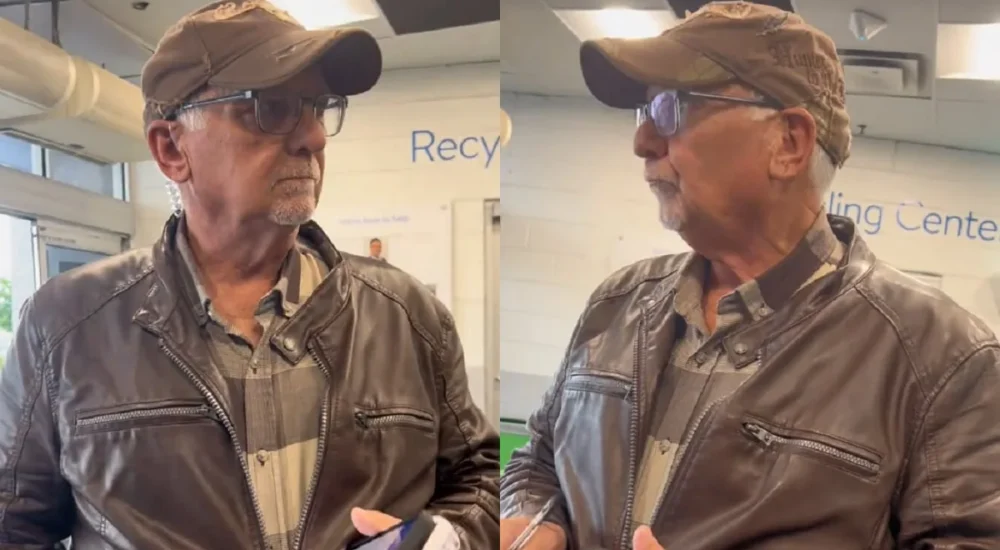
CALIFORNIA, CA — A California mother says a Walmart self-checkout employee went too far when she reached into her young son’s hands and took a toy to scan it herself. The complaint, shared in a TikTok video, quickly drew attention because it struck a nerve with shoppers who have strong feelings about how self-checkout should work.
In the clip, the employee first asks whether the creator wants to buy a warranty. When she declines, the worker then takes the toy from the child and says, “Okay, I got him. Thank you. I got it.” The mother can be heard telling her son it is okay to put the toy down while the scanning continues.
What the TikTok video shows at the register
The video, posted by @francescatorres69, centers on a short interaction at the self-checkout lane. After the warranty offer, the employee appears to move in close to the child, who is holding the toy the family is trying to buy. The mother’s reaction suggests she was caught off guard by how quickly the item was taken from her son.
As the checkout continues, the creator says, “I don’t know why you guys have self-checkout anyway,” before the video ends. Her comment reflects the frustration many shoppers feel when a supposedly self-service setup still requires a worker to step in closely. The moment is brief, but it is the part viewers focused on most.
Viewers split over whether the employee crossed a line
Commenters strongly disagreed about the worker’s behavior. Some said the employee had no business taking items directly from a child’s hands and argued that the action made the mother feel watched rather than helped. One viewer wrote that the employee should not have reached for the child’s belongings at all.
Others said they had seen similar situations at Walmart and understood why the interaction upset the mother. A few commenters described their own uncomfortable experiences at self-checkout and said they would have responded firmly if an employee had moved too close to their children. For them, the issue was not just the toy, but the feeling of personal space being ignored.
Why some shoppers say self-checkout still brings extra monitoring
Not every viewer saw the employee’s actions as suspicious. One former Walmart worker said employees are often watching for problems such as tag switching, when a cheaper barcode is used on a more expensive item. The same commenter also pointed to scanning mistakes, including items being charged twice.
That explanation gave the video a second reading: in some stores, workers are expected to keep an eye on self-checkout not because every shopper is a problem, but because the system can be abused or misused. From that perspective, stepping in may seem like part of the job rather than a personal judgment about the customer standing there.
Why the moment felt so personal to the shopper
For the mother, though, the interaction appeared to feel more invasive than helpful. The video’s emotional tone suggests she saw the employee’s approach as a judgment call about her and her family, not just a routine scan. That tension is part of why the clip resonated with so many people who have felt similarly observed in stores.
Several commenters said the encounter would have made them uncomfortable because it involved a child and a stranger moving in close during a transaction. Even a brief touch or reach can feel different when it involves a young child’s hands. The clip turned a small checkout moment into a larger debate about respect, trust, and personal space.
A familiar Walmart argument keeps resurfacing online
The reaction also fit a pattern seen in other online Walmart disputes, where shoppers and workers often disagree about what counts as help versus overreach. In this case, some people said the mother should have reported the employee to human resources if she believed the line had been crossed. Others thought the matter was minor and said the worker was only trying to keep the checkout moving.
What made the conversation linger was that both sides were speaking from experience. Some viewers said self-checkout has made shopping faster and more convenient, while others said it has also created more chances for awkward or tense encounters. The video’s comments became less about one toy and more about how much control shoppers expect to keep over their own purchases.
How one brief checkout exchange became a bigger conversation
The dispute ultimately came down to perspective. A routine scan at a self-checkout lane felt harmless to some viewers, but deeply unsettling to others who said the worker acted too aggressively. The mother’s frustration, the employee’s apparent urgency, and the child’s presence all made the exchange easy for people to project their own experiences onto.
That is why the video drew such a wide response so quickly. For supporters, it was a story about a parent protecting her child’s comfort. For defenders of the employee, it was a reminder that retail workers are often tasked with stopping mistakes before they happen. The result was a viral moment built on a question many shoppers already debate: when does store assistance stop feeling like assistance?
Real, uplifting stories from across America – GCHS Eagle's Eye.