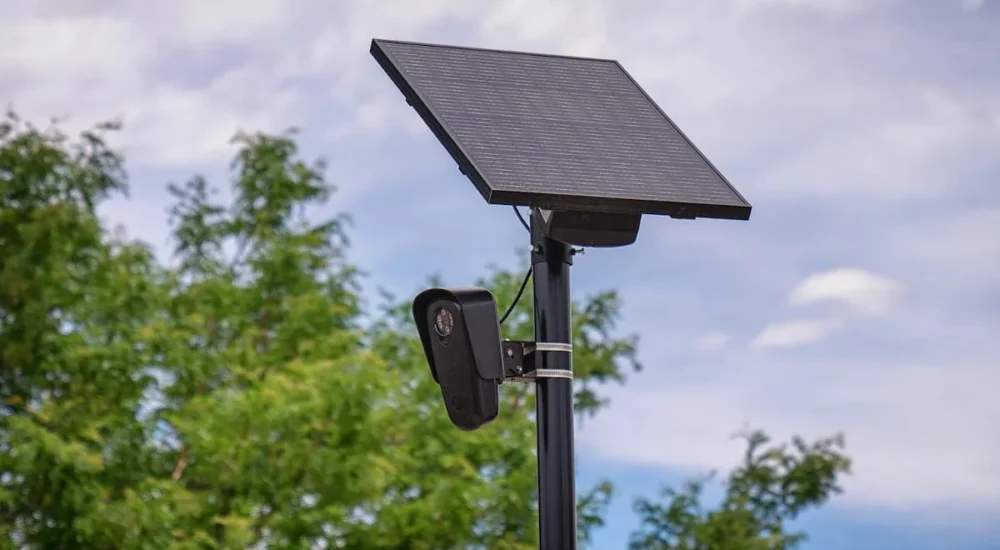
TEXAS, TX — A Texas man says local police told his wife that his truck had been linked to a crime through Flock cameras, even though he says the vehicle was parked at home when the incident happened. Chad Naho’olewa, who posts as Lonestar Hawaiian on TikTok, said the call left him worried about how automated license plate cameras can flag the wrong people.
He said the truck in question was a black Chevy, and that the timing described by police did not match where it actually was. The video he posted about the situation quickly spread online, drawing hundreds of thousands of views and turning a personal dispute into a wider conversation about surveillance and mistakes.
How the truck was allegedly linked to the scene
Naho’olewa said the problem began when local police repeatedly contacted his wife and told the family that their truck had been involved in a crime. In his telling, officers relied on Flock camera data that showed a black Chevy truck traveling on a roadway near his home.
He said that was enough to make him and his family feel as if they were being treated like suspects. But he insisted the vehicle had been sitting at the house during the relevant time, creating what he believes was a serious mix-up between a camera alert and the real location of the truck.
The creator’s account centers on the gap between what the cameras appeared to show and what he says was true in everyday life. For him, that gap is the whole story: a parked truck, a nearby road, and a law-enforcement alert that seems to have connected the wrong dots.
Why the mistake worried his family
Naho’olewa said he was not just annoyed by the accusation. He said he was concerned about what could happen if a similar mistake led to a traffic stop or a more dangerous encounter, especially with his wife and children often riding in the truck.
In the video, he imagined a situation where local police might pull the family over while believing the vehicle was connected to a crime. He said that possibility made the experience feel bigger than a simple misunderstanding, because it raised the stakes for everyone who uses the truck.
He also said the incident made him think differently about the surveillance system itself. Flock cameras are marketed as tools for finding stolen vehicles and missing people, but he suggested that a system meant to improve safety can also create fear when it appears to point at the wrong person.
A TikTok video turned the dispute into a bigger conversation
The Texas creator’s explanation reached a wide audience on TikTok, where the post drew 778,000 views, 82,900 likes, and more than 2,800 comments. That kind of attention helped turn a local accusation into a public debate about camera networks and how much trust they deserve.
Naho’olewa is known for automotive content and do-it-yourself projects, so his followers were already used to seeing him talk about trucks and hands-on repairs. This time, though, the video was less about a project and more about a possible case of mistaken identification that he says involved his own family.
Because the clip spread so fast, his story reached people far beyond Texas. The response showed how strongly viewers react when technology appears to misidentify an ordinary person and place that person in the middle of a law-enforcement investigation.
Viewers split between outrage and legal advice
Many commenters responded by blasting Flock cameras altogether. Some said the technology should be removed, while others described seeing similar systems in their own communities and expressed frustration with how widely they have been installed.
Another group of viewers focused on what Naho’olewa should do next. They urged him to sue, arguing that police and camera systems should not be able to assume the truck belonged to the driver involved in the incident without stronger proof.
The comments reflected a mix of anger, fear, and practical advice. Some people saw the story as evidence that the cameras are too invasive. Others saw it as a warning that anyone could be pulled into an investigation if automated systems misread a plate or vehicle description.
What he says this says about Flock cameras
Naho’olewa said Flock cameras were promoted as tools to reduce theft and help locate missing people, which is part of why many communities adopted them. But he said stories like his raise harder questions about accuracy, accountability, and whether the system can wrongly connect innocent people to crimes.
He also questioned whether the technology might be unconstitutional, though he did not outline a formal legal challenge in the video. For now, he appears to be waiting for the situation with police to be sorted out and has not posted a follow-up update.
His experience taps into a broader worry many Americans now share about automated surveillance: if a camera makes a mistake, who catches it, and how quickly can the person wrongly flagged clear their name? That is the question his video left hanging.
A viral complaint with an unresolved ending
For the moment, Naho’olewa’s story ends without a clear resolution. He said his family was accused after Flock cameras linked the truck to a crime, while he says the truck was parked at home the whole time.
That unresolved tension is part of why the video struck such a nerve. It is a straightforward account of one family trying to explain where their vehicle really was, and of a technology that many viewers now see as powerful but imperfect.
Whether the police department revisits the case or not, the clip has already done something important for viewers: it has given them a vivid example of how a small error in automated surveillance can feel deeply personal, especially when it involves a parent, a spouse, and children.
Real, uplifting stories from across America – GCHS Eagle's Eye.