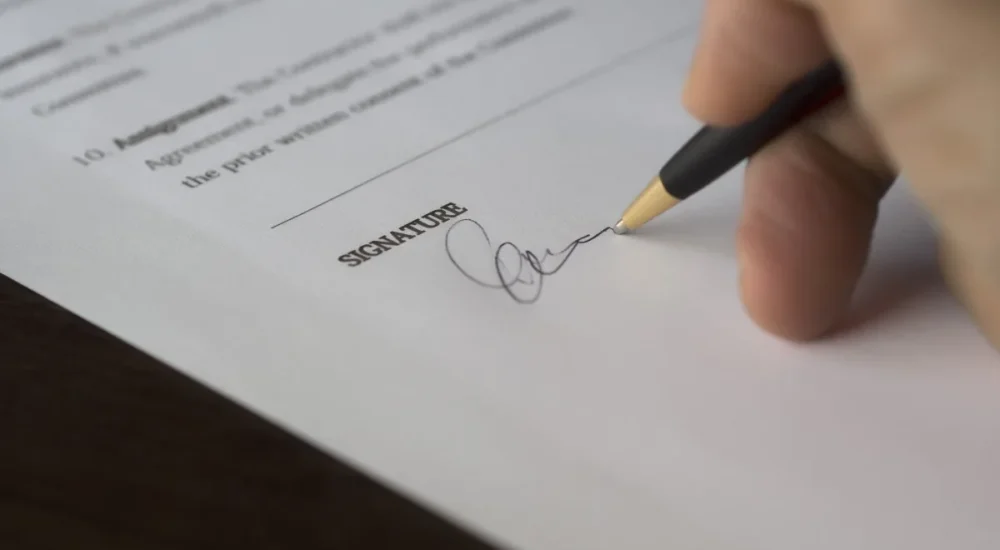
TEXAS, TX — A Texas woman says her former employer forged her signature on a non-compete agreement, then used that document to convince a new company to withdraw a job offer with a 40% salary increase.
She described the situation in a post on the r/legal subreddit, where she said she had worked as a senior operations coordinator for three years before accepting the new logistics job. According to her account, the rescinded offer came just three days before her start date, leaving her stunned and looking for help.
The woman said she never signed a non-compete agreement and believed her former boss had interfered with her next career move. She asked commenters what kind of lawyer she should contact and whether she could pursue claims in Texas for fraud and tortious interference.
How the job offer changed after her resignation
In her account, the woman said she had already given her former employer two weeks’ notice after accepting the new position. She expected to move smoothly from one logistics role to another, only to be told shortly before her scheduled start that the offer was off the table.
She said the new employer’s legal department had received a cease-and-desist letter from her former workplace. That letter, she claimed, alleged she was violating an active two-year non-compete agreement under Texas law.
The woman said the new company then pulled back to avoid legal risk. She described the decision as a major setback because the offer represented a significant raise and a fresh start after three years in her previous role.
The PDF she received raised more questions
After asking to see the document that had been sent out, the woman said her former employer responded with a PDF that appeared to contain an electronic signature dated three years earlier. At first glance, she said, the file looked legitimate.
She then looked deeper into the document and claimed she found signs that did not match the date on the signature. According to her post, the PDF metadata suggested the file had actually been created and digitally signed only four days earlier, which would have been two weeks after she resigned.
She said that discovery led her to believe the signature had been forged. In her words, the document was created from old tax paperwork and used to sabotage her next job, though those allegations have not been independently verified.
Why the woman says her next employer backed away
The woman said the new company still would not rehire her because it did not want to risk being drawn into a legal dispute. From her point of view, that left her without the higher-paying position she had already accepted and without an easy path forward.
She described the impact in personal terms, saying her former boss had destroyed her livelihood with what she called a blatantly fraudulent contract. Her concern was not only the lost paycheck, but also the possibility that a false non-compete could keep blocking future opportunities.
Her post centered on two questions: whether she could sue for tortious interference and fraud, and what kind of attorney could help her pursue criminal complaints over the alleged forgery. She said she was already reaching out to employment firms to review the PDF metadata.
Texas law could matter if the allegations are true
If the allegations are proven, the consequences could be serious. Under Texas Penal Code Section 32.21, knowingly forging a signature on a contract with the intent to defraud or harm someone can qualify as forgery, and a contract-related forgery is generally treated as a third-degree felony.
A civil case could also be possible if she can show that she was likely to land the job, that the former employer used unlawful conduct to stop it, and that she suffered financial harm. Those are the kinds of facts that can support a claim for tortious interference with a prospective business relationship.
Depending on the evidence, she might also have a fraud claim. The legal questions would likely turn on what the former employer knew, when the document was created, and whether the signature was truly fabricated.
Reddit users urged her to get a lawyer fast
Commenters on r/legal reacted with shock and quickly pushed her to find professional help. One person wrote that she needed an attorney immediately and warned her never to tell future employers where she was headed next.
Another user told her it was time to hire a real employment lawyer. She replied that she was already doing that and was contacting local firms to evaluate the PDF metadata that she believed showed the document had been created much later than claimed.
Other commenters said that, if the allegations are accurate, the former employer should face consequences. The broader reaction reflected concern that a departing worker could be harmed by a false document at the exact moment she is trying to move into a better-paying job.
A cautionary example for workers changing jobs
The woman’s account resonated because it touched on a fear many employees have when they leave a job: whether a former employer might try to interfere with a new opportunity. In her telling, a single disputed document was enough to shut down a six-figure offer just before she was set to begin.
It also underscored why workers facing contract disputes often seek legal guidance quickly. A document that appears valid at first can become a much bigger issue once metadata, timing, and the details of a resignation are examined closely.
For now, the dispute remains an online allegation tied to her own description of events. Still, her post drew attention because it combined a career setback, a suspected forged signature, and a reminder that employment transitions can become contentious fast.
Real, uplifting stories from across America – GCHS Eagle's Eye.