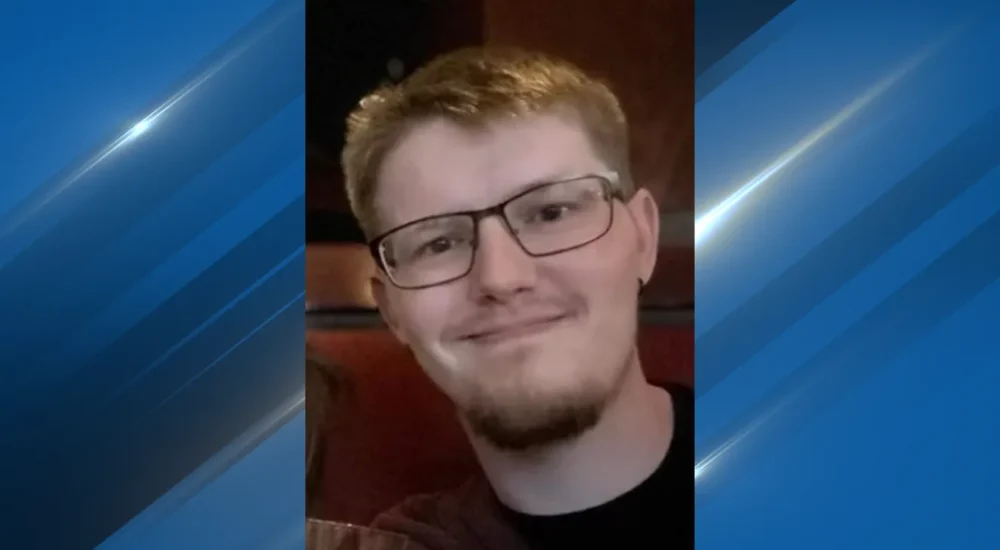
PORTLAND, OR — A Portland man will spend 18 years in prison after pleading guilty in the killing of Aaron McInnis, the Good Samaritan who stopped to help a woman in distress near Normandale Park in Northeast Portland last summer.
The sentence was handed down Friday for Arvoni Alexander Hayes, 25, who admitted to first-degree manslaughter and unlawful use of a weapon in the July 14, 2024 shooting. Prosecutors said McInnis was trying to help when the situation turned deadly.
McInnis had been dropping a friend off at her home when he noticed a woman crying in a nearby car. According to the Multnomah County District Attorney’s Office, he went over to check on her safety and ended up running after the vehicle moments before the shooting.
How a quiet check-in turned into a fatal encounter
Prosecutors say McInnis’s actions began with concern, not confrontation. He was near a home in Northeast Portland when he heard signs that someone in a nearby car might need help. Instead of walking away, he approached to see whether the woman was safe.
Inside that car, according to the district attorney’s office, was Hayes, his girlfriend, and the woman McInnis had noticed. Hayes stepped out of the vehicle without clothing on, then began dressing again after saying he would leave his girlfriend alone. Court records say the situation changed again when he jumped back into the car and told the woman to drive them away.
McInnis ran after the car as it pulled off. At an intersection nearby, prosecutors said, Hayes got out and fired at him. The shooting left McInnis with three gunshot wounds, and he later died at the hospital.
A plea that brought the case to sentencing
Hayes pleaded guilty to first-degree manslaughter and unlawful use of a weapon before Friday’s sentencing. The plea resolved a case that had drawn attention because of the way McInnis became involved: he was not part of the dispute, but a bystander trying to help.
By accepting responsibility, Hayes avoided a trial and the facts of the case were laid out in court records and the district attorney’s account. The 18-year sentence means he will serve many years in prison for the July 2024 killing.
Multnomah County prosecutors framed the outcome as a moment to recognize both the loss and the response to it. Deputy District Attorney Eric Palmer said McInnis acted with courage when he chose to check on a stranger, and said the office was honoring him while sending Hayes to prison.
Remembering Aaron McInnis as a man who did not hesitate
Palmer described McInnis as “a hero to the very end,” a phrase that captures how investigators and prosecutors viewed his final actions. He did not know the people in the car, but he still chose to see whether someone needed help.
That decision became the most important part of the case for the district attorney’s office, which emphasized that McInnis died after stepping forward for someone else’s safety. In the hours and days after the shooting, that message shaped the public telling of the case: McInnis was remembered not for how he died, but for the concern that led him there.
The killing also underscored how quickly an apparently ordinary moment can become fatal. What began as a neighborly act near a Portland park ended with a family mourning a man prosecutors say tried to do the right thing.
Police investigators and victim advocates played a central role
The Multnomah County District Attorney’s Office credited Portland Police Bureau homicide Detective Shaye Samora and other members of the homicide detail for their work on the case. Their investigation helped move the shooting from a chaotic scene to a case that could be prosecuted and resolved in court.
The DA’s office also highlighted the work of its victim advocates, who support the families and loved ones affected by violent crime. In cases like this one, those advocates often help relatives navigate the aftermath of a death, court dates, and the strain that comes with a criminal case.
While the sentencing closes one chapter, the case also stands as a reminder of the people behind the courtroom file: the investigators who reconstructed events, the prosecutors who presented them, and the family left to grieve a man they say acted selflessly.
Why the Portland case resonated beyond one neighborhood
The facts of the case struck a nerve because McInnis’s role was so simple and so human. He heard someone crying, thought help might be needed, and stepped in. That kind of response is familiar to many people, which may be why his death has been described in such personal terms.
Portland prosecutors did not present the case as a complicated mystery. They described a chain of events that began with concern and ended with a shooting, then used the sentencing to mark accountability. The 18-year prison term provides a formal conclusion, even though the loss remains with McInnis’s family and community.
In the end, the case’s lasting image is one of a man who paused to help a stranger. For the district attorney’s office, that is the reason McInnis was remembered as a hero, and why Friday’s sentence carried meaning beyond the courtroom.
Real, uplifting stories from across America – GCHS Eagle's Eye.