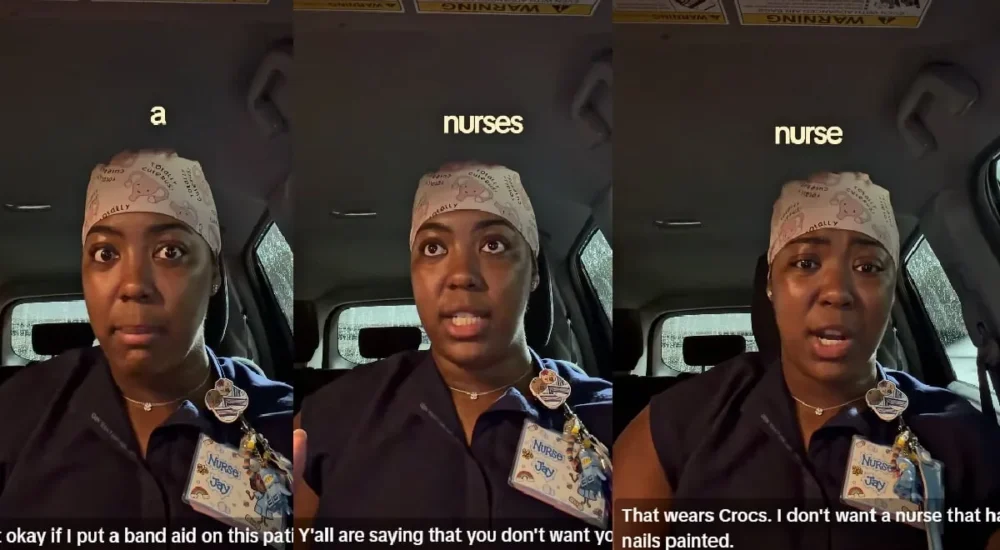
GEORGIA, GA — A Black Georgia nurse says a patient kept pressing her about where she was “really” from even after she had answered Georgia more than once. In a TikTok video, the nurse, Alisha, says the exchange left her feeling like the question carried an unfair assumption about her identity.
She described answering the same way each time and then pushing back with a pointed response about racism and belonging. Her account quickly resonated with viewers, many of whom said they recognized the moment as one Black people, and especially Black women in service jobs, encounter far too often.
How the TikTok exchange unfolded
In the video posted by Alisha, who uses the handle @therealrnbarbie, she tells the story directly to the camera. She says the patient began with a simple question about where she was from, and Alisha replied that she was from Georgia.
According to Alisha, that answer did not end the conversation. She says the patient continued asking where she was “originally” from, prompting her to repeat the same reply. Alisha says she eventually addressed what she believed was behind the questioning, saying that racism was still alive because people are “from everywhere.”
She also made clear that she understood the patient to be asking whether she came from Africa. Alisha said that was not the case, and she framed her response as a refusal to accept being treated like she did not belong simply because she is Black.
Supporters saw a familiar microaggression
Many commenters said the story felt painfully familiar. Some shared that being asked where they are “really” from is a frequent experience, especially when they are Black Americans who have long family histories in the United States.
Several viewers said the repeated questioning can feel like a microaggression rather than innocent curiosity. They argued that when a person gives an answer and still gets pressed, the interaction starts to feel less like conversation and more like an attempt to separate them from their own community.
Healthcare workers also joined in, saying the dynamic can be especially frustrating on the job. One commenter described patients using subtle bias while still expecting professional care, while another said a similar interaction ended only after a sharp comeback. For them, the video captured a stress they already know well.
Some viewers said the question might have been harmless
Not everyone read the exchange the same way. A smaller group of commenters said questions about background or nationality do not always come from prejudice and can simply be part of ordinary conversation.
One viewer said patients often ask about nationality and that the question does not automatically signal racism. That response reflected a broader split in the comments, where some people focused on intent while others focused on the impact of being repeatedly told their first answer was not enough.
The disagreement highlighted a familiar tension in these conversations: one person may believe they are making small talk, while the person hearing the question may feel singled out or invalidated. In Alisha’s telling, the issue was not curiosity itself, but the insistence that she must be from somewhere other than the place she already named.
Why the exchange hit a nerve
For many Black viewers, the story connected to a larger pattern of identity being questioned in everyday life. Commenters said the emotional strain comes not only from the question itself, but from the expectation that Black people should be ready to explain their belonging over and over again.
That feeling was part of why the video spread so quickly. People responded to the mix of frustration, humor, and fatigue in Alisha’s retelling, especially when she called out the assumption that she must have come from Africa simply because she is Black.
The conversation also showed how often Black women in healthcare carry these moments while still doing demanding jobs. Viewers said the clip reflected the pressure to remain composed, professional, and polite even when a patient’s words feel insulting.
A joking Wakanda response became part of the conversation
Amid the heavier reactions, some commenters used humor to imagine how they would have handled the exchange. One person joked that they would have said they were from Wakanda and that Prince T’Challa was their father, a nod to the Black Panther universe.
That kind of joking response became its own form of solidarity in the comment section. For many viewers, humor offered a way to process a situation that, for them, reflected something all too real and frustrating.
Even with the lighter jokes, the core message stayed serious. Commenters kept returning to the same point: repeated questioning about origin can land very differently depending on who is asking, who is being asked, and how often Black Americans are made to feel like they must prove where they belong.
What the video says about everyday belonging
Alisha’s post did more than document one awkward exchange. It opened a wider conversation about how assumptions can shape ordinary interactions, especially in settings where people are expected to remain calm and helpful no matter how they are treated.
The reaction showed that many viewers see these moments as part of a larger pattern of subtle bias rather than isolated misunderstandings. Even commenters who disagreed about intent still acknowledged that the exchange touched a nerve and brought up questions about how people talk to one another across race, background, and identity.
For supporters, the nurse’s response was memorable because it refused to let the questioning stand unchallenged. Her video gave language to a feeling many people recognized immediately: the exhaustion of being asked, again and again, to explain what should never need explaining.
Real, uplifting stories from across America – GCHS Eagle's Eye.