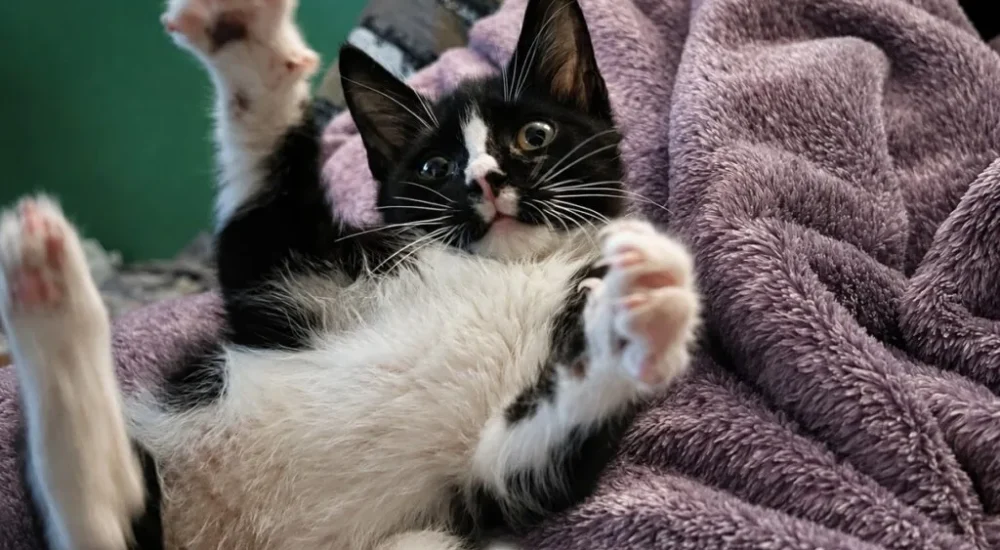
SPOKANE, WA — A Spokane man who took in a sick stray kitten now has a very different story to tell. After more than a year of worrying symptoms and unanswered questions, the cat known as Spot received a rare diagnosis and specialized surgery at Washington State University.
What began as a rough night outdoors became a long search for answers, but it ended with a treatment plan that has already helped Spot gain strength. Her recovery is also a reminder of how veterinary specialists and donor support can make complicated care possible.
How Spot Found a Home
Darren Bass first saw the kitten on a cold October night in 2024. She looked small and unwell, and he did not think she would make it through the night outside, so he brought her in with the idea of finding a permanent home for her.
Instead, the kitten stayed. Bass named her Spot, and the two formed a bond at a time when his own life felt uncertain. He said he was struggling to find work and worried about housing, so caring for the little cat gave him purpose while she settled into a safe place indoors.
A week later, he took Spot to a veterinarian for vaccinations and treatment for what seemed to be a respiratory infection. At first she improved, but the symptoms never fully disappeared and gradually became more serious, leading to repeated visits in search of an explanation.
A Rare Diagnosis Changes Everything
The breakthrough came when Spot was seen by Dr. Whitney Nelson, an internal medicine specialist at Pet Emergency Clinic and Referral Center in Spokane. After reviewing her history and noticing signs that included her copper-colored eyes, Nelson suspected a portosystemic shunt, a rare congenital liver defect.
That condition allows blood to bypass the liver instead of being filtered, which can lead to toxin buildup and a range of health problems, including poor growth, weight loss, appetite changes and neurological symptoms. An ultrasound confirmed the diagnosis, and Spot was referred to Washington State University’s Veterinary Teaching Hospital for surgery.
Board-certified surgeon Dr. Boel Fransson said the operation requires extensive training and careful technique. The team used a cellophane band to gradually close the abnormal vessel over time, giving Spot’s liver a chance to adjust and offering the best path toward a normal lifespan.
A Stronger Future Ahead
Spot’s surgery appears to have worked, and Bass says she is now gaining weight, growing stronger and enjoying daily life again. He described his experience at WSU as a relief after months of frustration, saying the veterinarians helped him finally understand what was happening and gave Spot a real chance to recover.
Financial help also played a major role. WSU’s Good Samaritan Fund provides support for clients facing unexpected hardship while their animals receive care at the hospital, and Bass said that assistance helped him handle the cost of Spot’s surgery.
For him, the story has become about more than one cat’s medical recovery. It is also about kindness arriving at the right time, and about the hope that one day he can help someone else the way WSU helped him and Spot.
Real, uplifting stories from across America – GCHS Eagle's Eye.